HR Statutory Compliance Audit in India – A Complete Guide for Businesses
Managing human resources involves much more than hiring employees, processing salaries, and maintaining attendance records. Every organization must also follow applicable labour laws, statutory regulations, employee welfare requirements, and workplace policies. Even a small compliance gap can lead to financial penalties, legal notices, employee disputes, and operational challenges.
For businesses operating in India, regularly reviewing HR and statutory processes is essential to ensure that employee-related legal obligations are being fulfilled correctly.
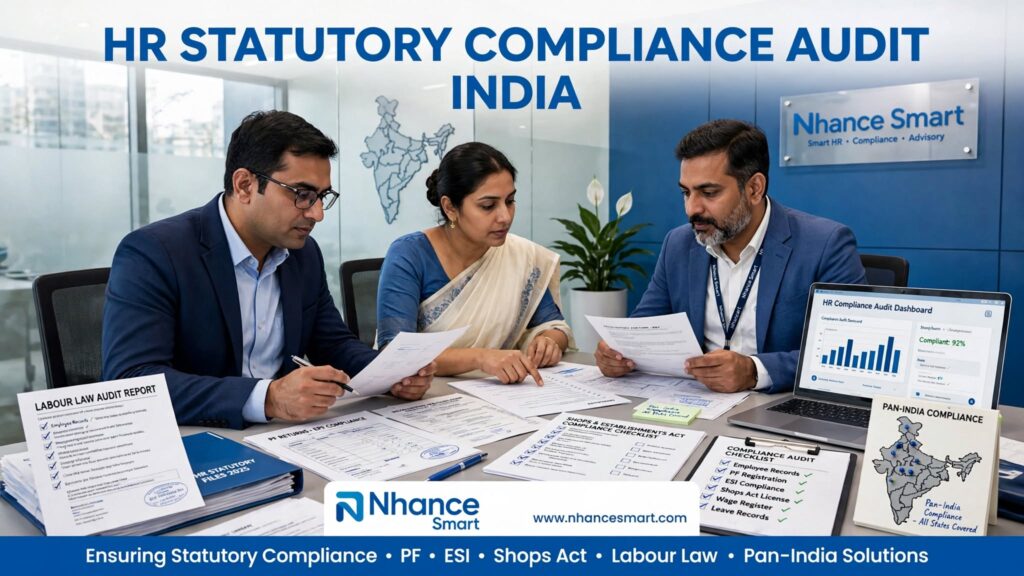
This is where an HR Statutory Compliance Audit in India becomes important. A professional HR compliance audit helps organizations identify regulatory gaps, review employee documentation, verify payroll practices, and ensure that applicable statutory requirements are properly managed.
At NhanceSmart, we help businesses strengthen their compliance management through expert labour law advisory, statutory compliance audits, and AI-powered platforms. Our solutions, Complysmart and Attendenz, support organizations in improving regulatory visibility and workforce governance.
Why Does Your Business Need an HR Statutory Compliance Audit?
Many organizations assume that their HR processes are compliant simply because salaries are paid on time and employees have proper documentation. However, statutory compliance involves several additional responsibilities that require regular monitoring.
As businesses expand, employee strength increases, and operations become more complex, managing every applicable legal requirement becomes challenging.
Here are some important reasons why businesses should conduct regular HR statutory compliance audits.
Identify Compliance Gaps
An HR compliance audit helps businesses identify missing registrations, incorrect statutory deductions, incomplete employee records, and missed filing requirements before they create bigger problems.
Avoid Legal Penalties and Financial Risks
Non-compliance with applicable labour laws can result in penalties, interest, legal notices, and other financial liabilities. Regular audits help organizations identify potential risks and take corrective action.
Ensure Accurate Payroll and Statutory Deductions
Incorrect PF, ESI, Professional Tax, TDS, or other applicable deductions can create payroll discrepancies. An audit helps verify whether salary calculations and statutory payments are accurate.
Improve Employee Documentation
Appointment letters, employee records, attendance registers, wage records, leave information, and statutory documents must be maintained according to applicable requirements.
A compliance audit helps organizations identify missing or outdated documentation.
Prepare for Labour Inspections
Businesses should maintain proper records and supporting evidence to respond to applicable labour inspections, statutory reviews, and regulatory requirements.
Strengthen HR Governance
A structured compliance audit improves accountability between HR, finance, payroll, management, and external service providers.
What Is Covered Under an HR Statutory Compliance Audit in India?
An HR statutory compliance audit involves reviewing the organization’s employee-related legal obligations, payroll processes, statutory registrations, workplace policies, and compliance documentation.
The audit scope depends on the organization’s industry, employee strength, operational structure, and applicable central and state laws.
Some important areas covered during an HR compliance audit include the following.
1. Provident Fund (PF) Compliance Audit
Provident Fund compliance is an important part of employee social security management.
During a PF compliance audit, businesses should review:
- EPFO registration and applicable coverage.
- Employee eligibility and PF enrolment.
- UAN and employee KYC details.
- Employee and employer contribution calculations.
- Monthly ECR filing and payment records.
- PF challans and contribution statements.
- Employee joining and exit information.
- Payroll and PF contribution reconciliation.
- Applicable interest and damages for delayed payments.
A proper PF audit helps businesses identify contribution discrepancies and improve statutory record management.
2. Employee State Insurance (ESI) Compliance Audit
ESI provides eligible employees with medical and social security benefits.
An ESI compliance audit helps verify whether applicable employer responsibilities are being fulfilled.
Important audit checks include:
- ESIC registration and establishment coverage.
- Employee eligibility and registration.
- Insurance number and employee details.
- Employer and employee contribution calculations.
- Monthly contribution payment records.
- Applicable returns and filing requirements.
- Employee accident reporting documentation.
- Payroll and ESI contribution reconciliation.
Reviewing these areas helps organizations maintain accurate ESI records and identify potential compliance gaps.
3. Professional Tax Compliance Audit
Professional Tax requirements vary across Indian states.
Businesses must review applicable state registration, employee deductions, payment requirements, and return filing obligations.
An audit should verify:
- Applicable Professional Tax registration.
- Employee salary details.
- Correct tax slab application.
- Monthly or periodic deductions, as applicable.
- Timely tax deposits.
- Applicable return filings.
- Payment challans and supporting records.
For organizations operating across multiple states, state-wise Professional Tax compliance should be reviewed separately.
4. Payroll and Salary Compliance Audit
Payroll is one of the most important areas of HR statutory compliance.
Errors in salary calculations, employee deductions, or statutory payments can create financial and legal complications.
Important audit checks include:
- Employee salary structures.
- Minimum wage compliance.
- Basic salary and applicable allowances.
- Salary payment timelines.
- Overtime calculations.
- Leave and attendance records.
- Employee reimbursements.
- Payslip accuracy.
- Full and final settlement calculations.
- Payroll reconciliation with statutory records.
A detailed payroll audit helps businesses maintain transparent and accurate salary management processes.
5. Labour Law Registrations and Licenses
Businesses must obtain and maintain applicable registrations and licenses based on their establishment type and activities.
An HR statutory compliance audit should review:
- Shops and Establishment registration.
- Factory-related registrations and licenses, wherever applicable.
- Contract labour registrations and licenses, wherever applicable.
- PF and ESI registrations.
- Professional Tax registration.
- Applicable labour welfare registrations.
- Registration validity and renewal requirements.
- Changes in establishment details.
Missing or outdated registrations can expose organizations to regulatory complications.
6. Minimum Wages and Working Hours Compliance
Employers must follow applicable wage and working condition requirements.
During the audit, compliance professionals should review:
- Applicable minimum wage notifications.
- Employee skill classifications.
- Salary structures and wage calculations.
- Working hours and weekly holidays.
- Overtime records and payments.
- Attendance registers.
- Leave records.
- Applicable wage deductions.
- Timely salary payments.
Businesses should regularly review updated wage notifications to ensure that their payroll structures remain compliant.
7. Bonus and Gratuity Compliance Audit
Employee benefits are another important area of statutory compliance.
Depending on the applicable law, coverage, and employee eligibility, organizations may have bonus and gratuity responsibilities.
An audit should review:
- Employee eligibility.
- Bonus calculation records.
- Statutory bonus payments.
- Gratuity eligibility and calculations.
- Employee service records.
- Retirement and resignation documentation.
- Full and final settlement records.
- Applicable payment timelines.
Proper verification helps businesses identify calculation errors and employee benefit-related compliance gaps.
8. POSH Act Compliance Audit
The Prevention of Sexual Harassment of Women at Workplace Act, 2013, establishes important workplace responsibilities for employers.
An audit should verify:
- Availability of a written POSH policy.
- Internal Committee constitution wherever required.
- Required committee composition.
- Display of applicable workplace notices.
- Employee awareness and training programmes.
- Complaint handling procedures.
- Confidential maintenance of complaint records.
- Applicable annual reporting requirements.
POSH compliance is an essential part of workplace governance and employee protection.
9. Contract Labour and Vendor Compliance Audit
Organizations working with manpower agencies, contractors, and third-party service providers must review applicable contractor compliance requirements.
Important audit checks include:
- Contractor registrations and licenses.
- Applicable principal employer requirements.
- Worker appointment and deployment records.
- Attendance and wage registers.
- PF and ESI compliance evidence.
- Salary payment records.
- Contractor statutory challans.
- Applicable statutory returns.
- Vendor compliance documentation.
Regular employer and vendor compliance audits help organizations identify risks associated with outsourced manpower.
Essential HR Statutory Compliance Audit Checklist for Indian Businesses
Businesses can use the following checklist as a starting point for reviewing their HR and statutory compliance processes.
Employee Documentation Checklist
- Appointment letters are maintained.
- Employee personal information is updated.
- Employment contracts are properly documented.
- Attendance records are maintained.
- Leave records are updated.
- Salary structures are documented.
- Employee joining and exit records are available.
- Statutory employee information is maintained.
Payroll Compliance Checklist
- Salary calculations are accurate.
- Applicable minimum wage requirements are followed.
- PF deductions are verified.
- ESI deductions are verified.
- Professional Tax deductions are accurate.
- Salary TDS is calculated wherever applicable.
- Overtime payments are correctly calculated.
- Payslips are generated and maintained.
- Full and final settlements are properly reviewed.
Statutory Compliance Checklist
- Applicable registrations are available.
- PF and ESI contributions are deposited.
- Applicable statutory returns are filed.
- Professional Tax obligations are fulfilled.
- Labour Welfare Fund requirements are reviewed.
- Applicable bonus and gratuity obligations are fulfilled.
- Statutory registers are maintained.
- Compliance challans and payment evidence are available.
Workplace Compliance Checklist
- POSH policy is implemented.
- Internal Committee is constituted wherever required.
- Applicable workplace notices are displayed.
- Employee awareness programmes are conducted.
- Working hours are monitored.
- Leave and holiday requirements are followed.
- Applicable health and safety requirements are reviewed.
The checklist should be customized according to the applicable legislation and the organization’s operational requirements.
How Is an HR Statutory Compliance Audit Conducted?
A professional HR compliance audit should follow a structured process to ensure that important compliance areas are properly reviewed.
Step 1: Understand Business Operations
The first step is to understand the organization’s business activities, employee strength, establishment type, work locations, and workforce structure.
This helps identify which central and state labour laws may apply.
Step 2: Collect HR and Statutory Documents
The audit team collects relevant employee records, payroll information, registration certificates, statutory challans, returns, workplace policies, and contractor documentation.
Step 3: Review Applicable Legal Requirements
Compliance professionals identify the applicable statutory obligations based on the organization’s industry, workforce, and operational structure.
Step 4: Verify Payroll and Statutory Records
Payroll calculations, PF and ESI contributions, Professional Tax deductions, TDS records, salary payments, and statutory filings are reviewed against supporting documents.
Step 5: Identify Compliance Gaps
The audit identifies missing documents, incorrect calculations, delayed payments, incomplete registrations, and other compliance-related issues.
Step 6: Prepare an Audit Report
A detailed audit report highlights identified gaps, potential risks, applicable requirements, and recommended corrective actions.
Step 7: Implement Corrective Actions
The organization should assign responsibilities, establish timelines, and implement corrective measures to address identified compliance gaps.
Step 8: Conduct Follow-Up Reviews
Follow-up audits help verify whether corrective actions have been completed and whether compliance processes are working effectively.
Common HR Statutory Compliance Mistakes Businesses Should Avoid
Even established companies with dedicated HR teams can face compliance problems if statutory requirements are not regularly reviewed.
Some common mistakes include:
Incomplete Employee Documentation
Missing appointment letters, employee records, attendance details, or salary documentation can create problems during inspections and audits.
Incorrect Statutory Calculations
Errors in PF, ESI, Professional Tax, TDS, bonus, or gratuity calculations can result in financial liabilities.
Delayed Statutory Payments
Missing payment deadlines can lead to interest, damages, and other applicable consequences.
Ignoring Contractor Compliance
Organizations sometimes depend entirely on vendors without verifying their statutory records and payment evidence.
Outdated HR Policies
Using outdated employment policies, wage structures, and workplace procedures can increase compliance risks.
No Regular Compliance Audits
Waiting until an inspection or legal notice arrives before reviewing compliance can make corrective action more difficult.
How NhanceSmart Helps Businesses with HR Statutory Compliance Audits in India
At NhanceSmart, we understand that managing multiple labour laws and statutory responsibilities can be challenging for growing businesses.
Our specialists combine practical labour law expertise with AI-powered compliance technology to help organizations identify compliance gaps and improve their HR governance processes.
Comprehensive HR Compliance Audit Services
Our compliance professionals support businesses with:
- HR Statutory Compliance Audits.
- Labour Law Compliance Audits.
- Payroll Compliance Audits.
- PF and ESI Compliance Audits.
- Employer and Vendor Compliance Audits.
- Factory Compliance Audits.
- Labour Law Advisory.
- Statutory Registrations and Licenses.
- POSH Act Compliance.
- Contract Labour Compliance.
- HR Operations Support.
AI-Powered Regulatory Intelligence with Complysmart
Complysmart is NhanceSmart’s AI-powered compliance platform designed to help businesses improve regulatory intelligence and compliance visibility.
It supports organizations in understanding relevant regulatory requirements and managing their compliance responsibilities more effectively.
Workforce Governance with Attendenz
Attendenz supports hire-to-retire workforce governance and helps organizations improve employee-related process management.
By connecting workforce processes with compliance requirements, businesses can establish better visibility and control over HR operations.
Customized Compliance Solutions
Every organization has different statutory obligations.
NhanceSmart helps businesses understand their employee structure, business operations, applicable regulations, and compliance requirements before recommending suitable solutions.
Whether you operate a startup, SME, manufacturing unit, or large enterprise, our compliance support is designed around your operational requirements.
Why Businesses Choose NhanceSmart for HR Statutory Compliance
Businesses need more than a basic checklist to maintain effective statutory compliance. They need experienced professionals who understand applicable labour laws and their practical implementation.
Organizations working with NhanceSmart can benefit from:
- Experienced labour law compliance professionals.
- Comprehensive HR statutory compliance audits.
- Central and state-level compliance guidance.
- Payroll and statutory compliance support.
- Employer and vendor compliance verification.
- Identification of compliance gaps.
- Practical corrective action recommendations.
- AI-powered compliance platforms.
- Better regulatory visibility.
- Ongoing compliance advisory.
Our combination of compliance expertise and modern technology helps businesses strengthen their HR processes and reduce avoidable statutory risks.
How Often Should Businesses Conduct HR Statutory Compliance Audits?
HR statutory compliance should be reviewed regularly rather than only during labour inspections.
Businesses can follow a structured audit schedule.
Monthly Reviews
- Payroll calculations.
- PF and ESI contributions.
- Applicable Professional Tax payments.
- Salary and attendance reconciliation.
- Statutory payment deadlines.
Quarterly Reviews
- Employee documentation.
- Contractor compliance.
- Statutory registration updates.
- HR policies and workplace records.
- Compliance gaps and pending actions.
Annual Reviews
- Comprehensive HR statutory compliance audit.
- Labour law compliance review.
- POSH documentation and reporting.
- Applicable annual returns.
- Employee benefit obligations.
- Regulatory updates and policy revisions.
The audit frequency should be adjusted according to the organization’s size, industry, risk exposure, and applicable statutory requirements.
Conclusion
Maintaining HR statutory compliance is essential for businesses operating in India. From employee documentation and payroll to PF, ESI, Professional Tax, workplace policies, and contractor compliance, organizations must regularly review their statutory responsibilities.
An HR Statutory Compliance Audit in India helps businesses identify compliance gaps, improve documentation, verify payroll accuracy, and reduce legal and financial risks.
At NhanceSmart, we combine experienced labour law professionals with AI-powered compliance technology to help businesses strengthen HR governance and manage statutory responsibilities more efficiently.
Whether you are a startup, SME, manufacturing company, or established enterprise, our customized HR compliance audit and advisory solutions help build more organized and compliant business operations.